Back to the Main page
Healthcare Platform
Overview
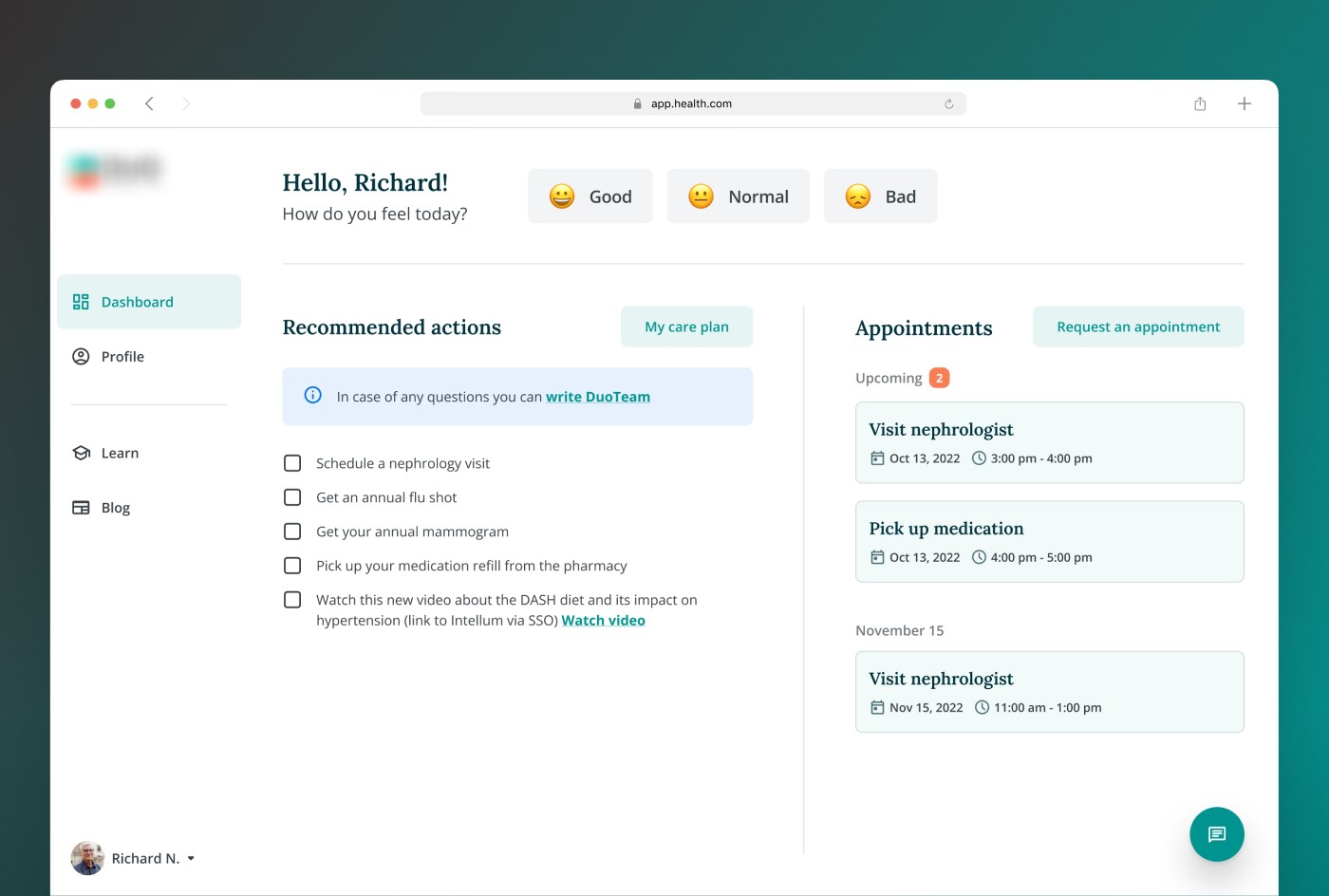
A US-based medical group specializing in chronic kidney disease (CKD) and end-stage kidney disease (ESKD) engaged our team to design and deliver a multi-platform digital solution supporting continuous patient care. The organization partners with nephrologists and caregivers to provide high-touch support, improve treatment adherence, and ensure patients can access their care team at any time.
The engagement focused on developing an MVP to validate the product strategy, measure patient engagement, and establish a scalable digital ecosystem across mobile and web.
Timeframe: 1 months
Team: UX Designer, Web and Mobile Developers, Back-End Developers, QAs, PM
Platform: iOS and Android Apps, Web App
Industry: Healthcare, B2C
The Challenge
Patients managing chronic kidney conditions faced fragmented digital touchpoints, manual communication workflows, and limited access to timely clinical information. The medical group needed a secure, user-friendly platform that centralized patient data, enabled real-time communication, and supported a largely elderly population with varying levels of digital literacy.
The solution required seamless interoperability with existing systems, adherence to HIPAA compliance, and alignment with complex care-team workflows.
My Role & Collaboration
Senior UX Designer leading the end-to-end design process — from research strategy through final implementation. I worked alongside a product manager, healthcare stakeholders, and a development team.
Research and Insights
Due to the sensitive nature of the project and time constraints, direct patient access was limited. The initial research phase relied heavily on stakeholder interviews and secondary research.
Secondary research
Industry standards for chronic-care management, accessibility guidelines for elderly populations, HIPAA-compliant design patterns, and benchmarks for patient portals informed the UX approach.
Stakeholders Sessions
Due to clinical and privacy limitations, direct patient interviews were not feasible. Instead, usability validation was conducted with internal stakeholders—clinicians, care coordinators, and operations leads. Their feedback shaped workflow logic, highlighted clinical constraints, and informed usability optimizations.
Competitors analysis
Analysis of patient portals, care-management apps, and EHR extensions surfaced opportunities in communication, appointment clarity, and care-plan visibility, guiding differentiation for the MVP.
Problem Statement
Patients with chronic kidney conditions lack a unified, accessible, and secure platform to manage their care, access medical records, and communicate with clinical teams. Disconnected systems and manual workflows reduce engagement, delay support, and increase operational overhead. The organization needs a modern, cross-platform solution that integrates seamlessly with internal systems, enhances communication, and supports a simple, accessible experience for elderly users.
Design process
Ideation & Prototyping
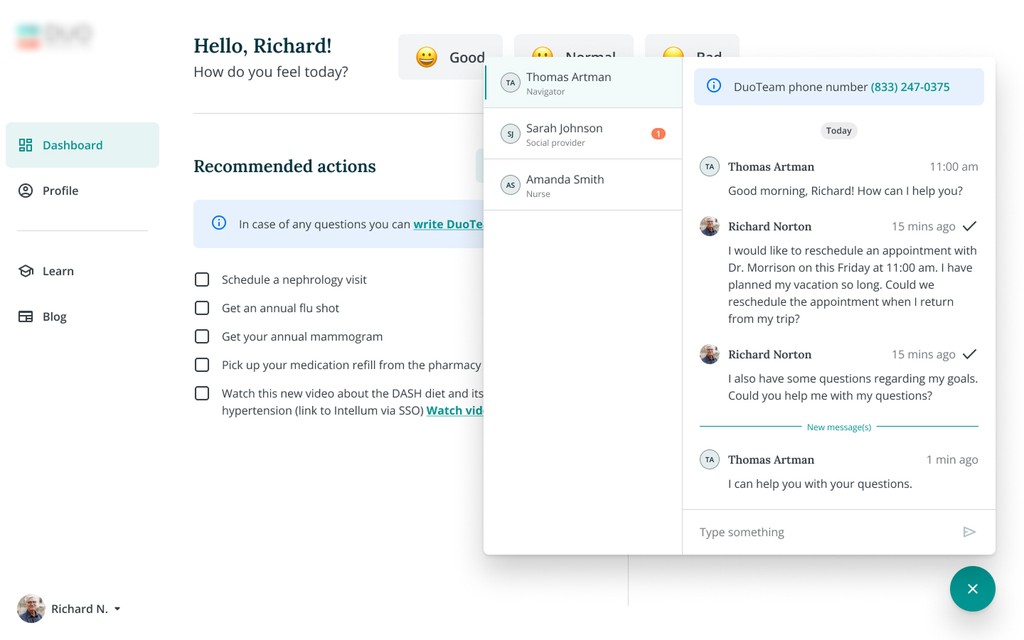
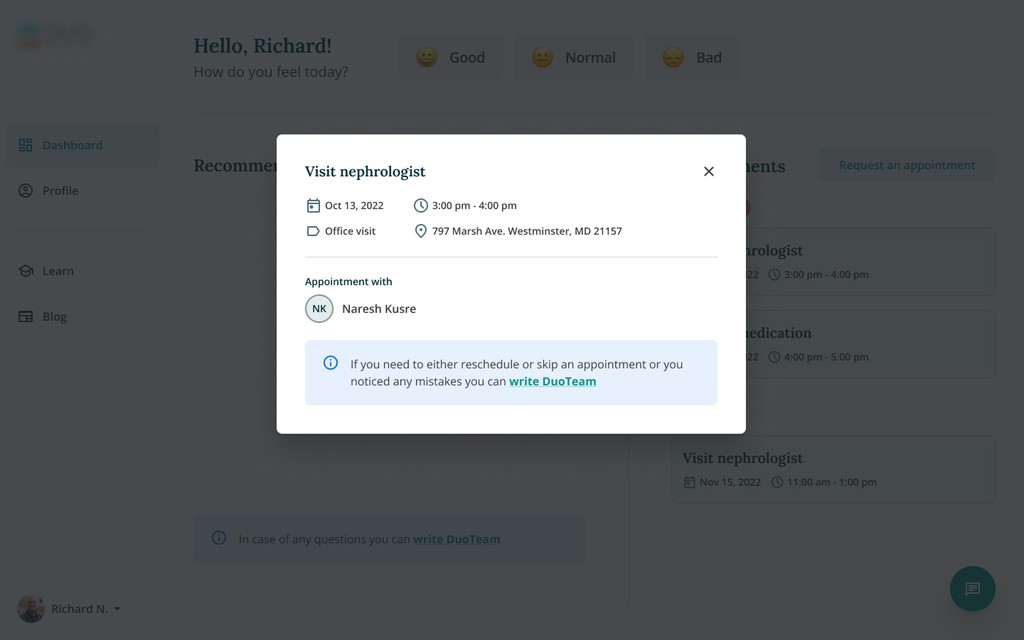
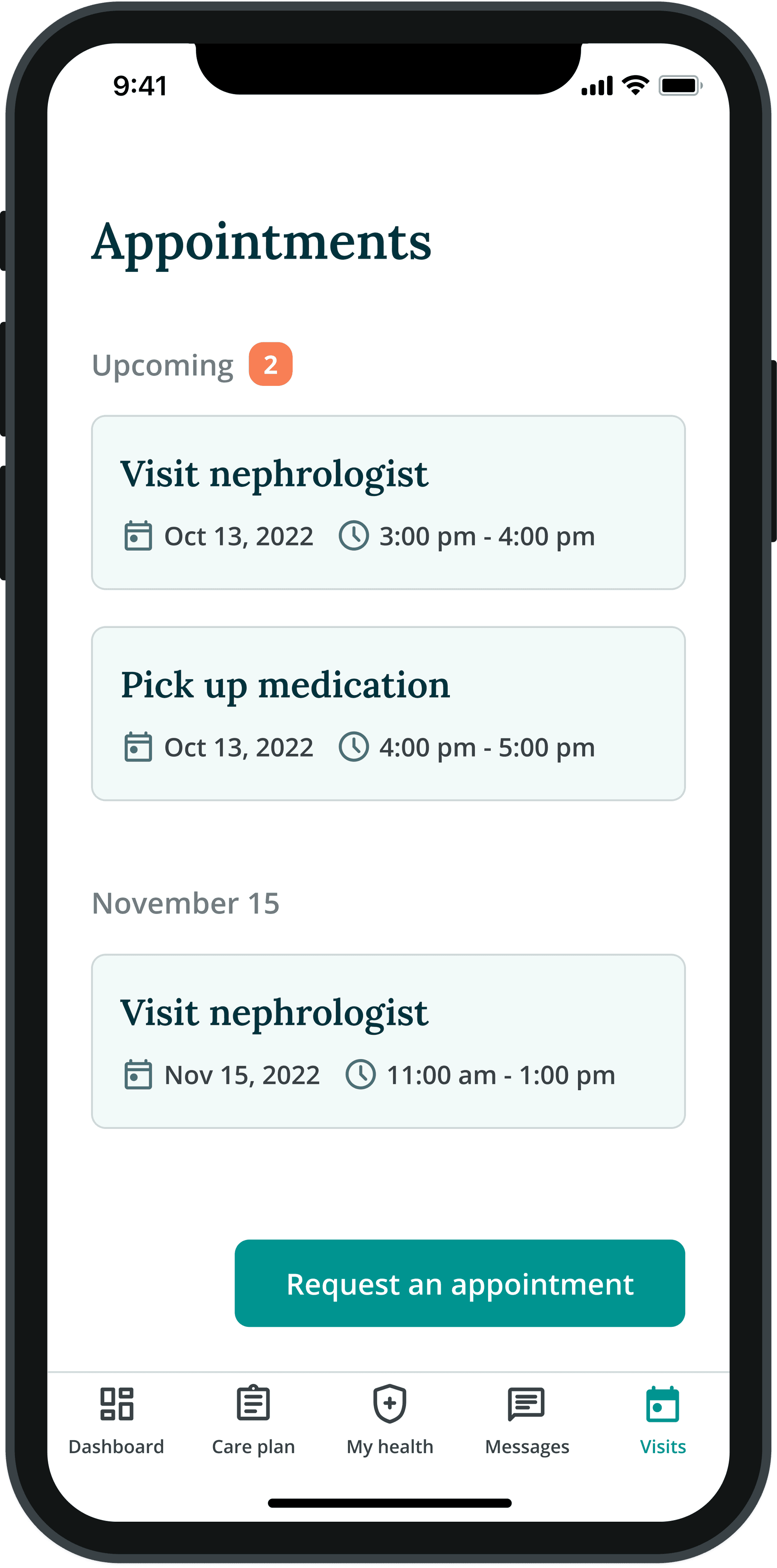
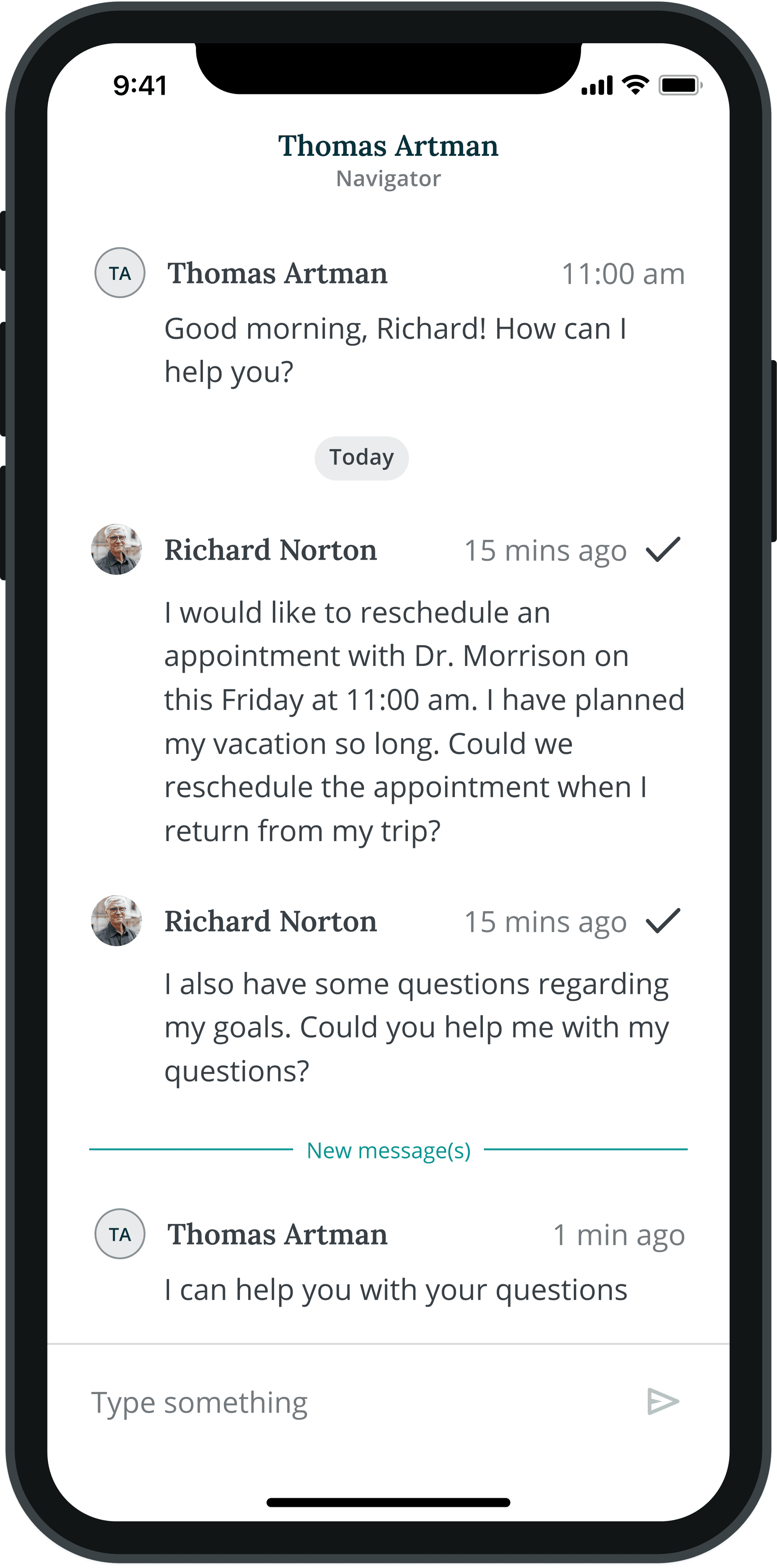
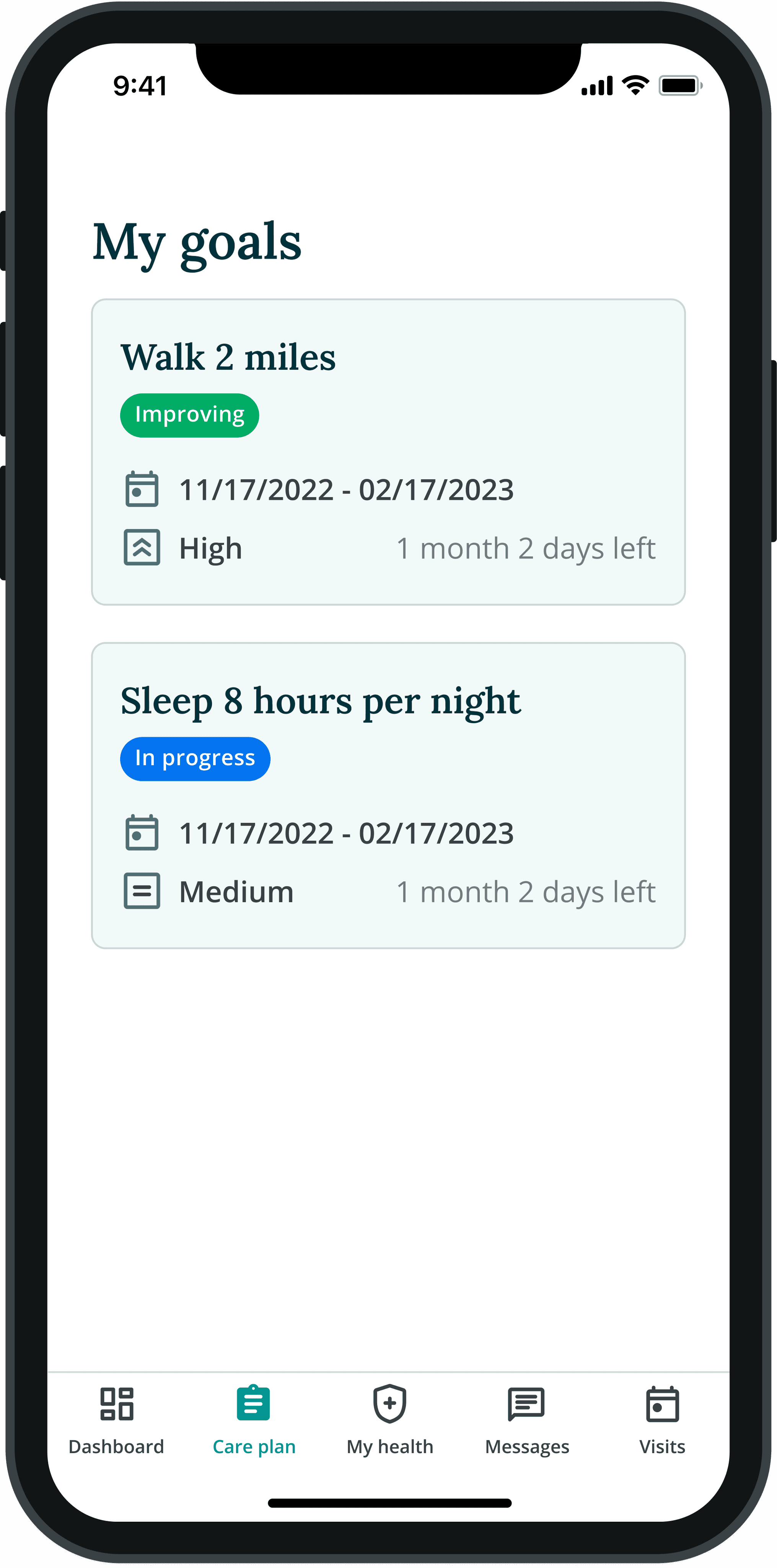
Designed patient journeys across appointments, health-status tracking, messaging, and goal management.
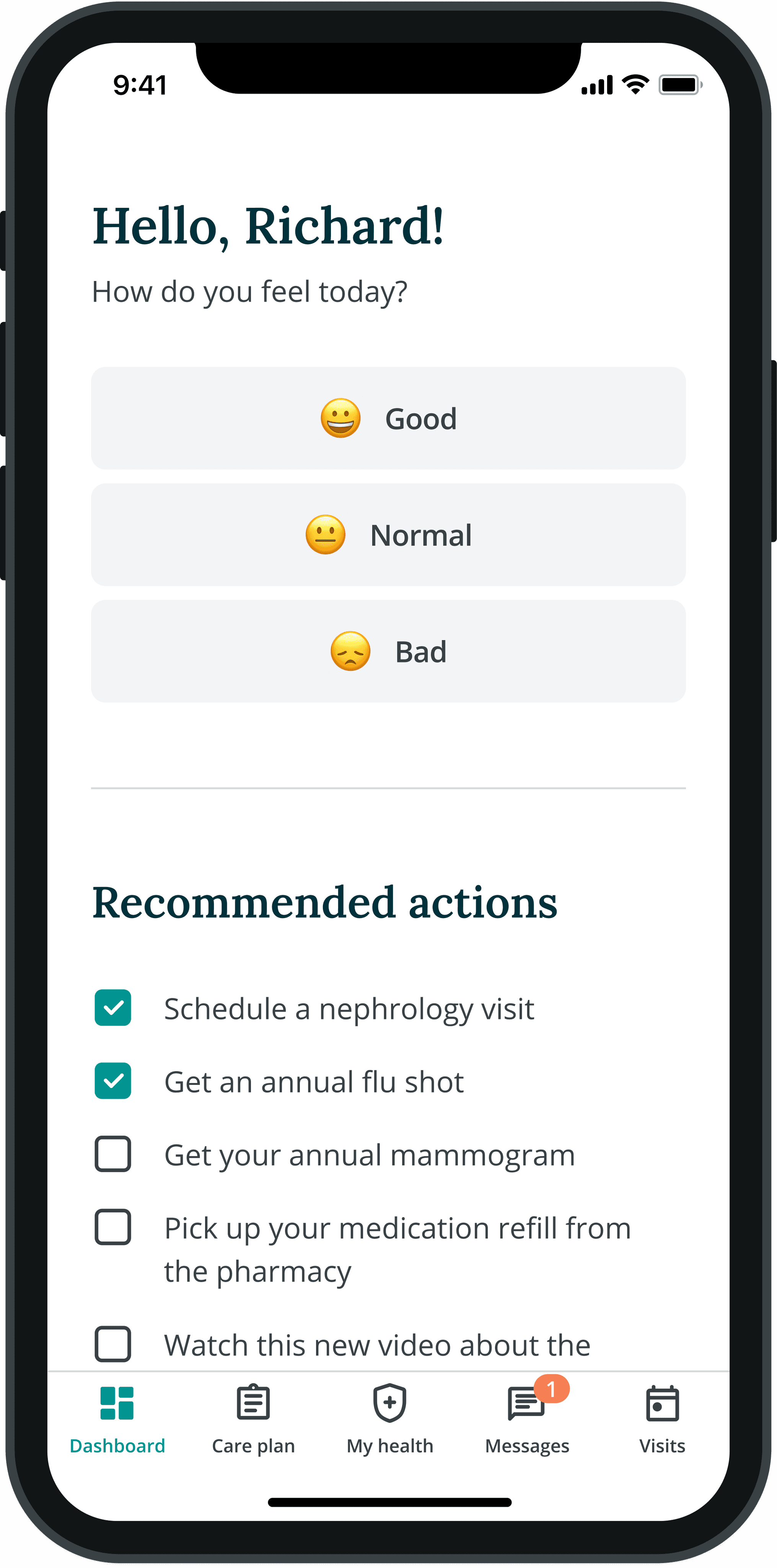
Delivered a consistent experience across iOS, Android, and web.
Implemented role-based access and permissions aligned with HIPAA requirements.
Developed responsive layouts to ensure accessibility across device types.
Testing & Iteration
As I didn't have direct access to users I decided to test prototype with our stakeholders and they provided valuable feedback, leading to:
Conducted iterative testing with stakeholders.
Refined visibility, typography, spacing, and interaction patterns to align with accessibility needs.
Simplified navigation and prioritized high-value tasks such as messaging and appointment scheduling.
I tracked key usability metrics:
Task Success Rate: 94% of participants in simulated scenarios successfully completed key tasks (e.g., initiating an emergency call, creating a support circle).
User Satisfaction Score (SUS): The app achieved a score 9 out of 10, indicating high usability and satisfaction.
Impact
The MVP strengthened the organization’s chronic-care delivery model, enabling:
Faster communication between patients and clinical teams
Enhanced visibility into patient progress and adherence
More efficient support workflows due to integrated messaging and record updates
Consistent user experience across mobile and web channels
A scalable foundation to extend future care-management capabilities
Lessons Learned
Designing for chronic-care populations requires balancing simplicity, accessibility, and compliance.
Stakeholder collaboration is critical when patient access for research is limited.
Integration planning must begin early due to the complexities of healthcare data systems.
Next Steps
Develop an internal operations platform for request management and communication.
Introduce secure video visits to complement text-based messaging.
Implement an AI-driven support assistant for immediate responses and triage.
Extend reporting and analytics to support proactive care-management workflows.